Ultrasound Guided Injection Therapy
Precise, image-guided injections that deliver medication exactly where it is needed for safer, more effective relief.
What You Need To Know
How ultrasound guided injections work and why precision matters for your treatment.
Ultrasound Guided Injection Therapy
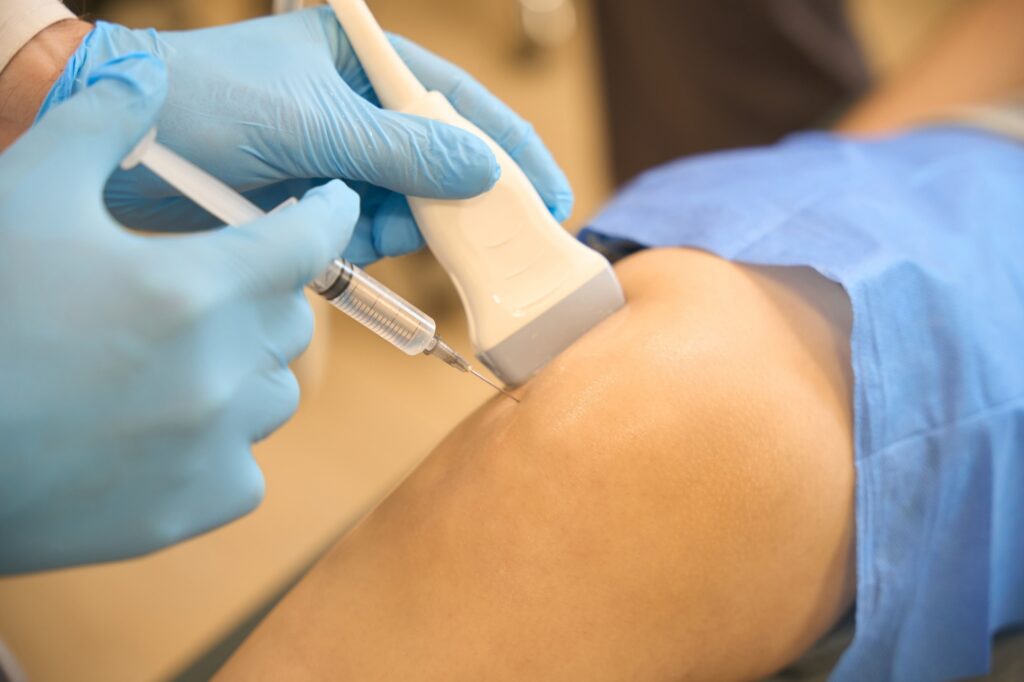
Diagnostic ultrasound is used today to provide doctors with the ability to see where an injection is going and to ensure that the medication is delivered directly to the exact spot of necessity. By placing the medication right where it is needed, we avoid damaging surrounding tissue and prevent the medication from being placed in areas where it will be less effective.
Diagnostic ultrasound was first reported in 1958 as a reliable method to evaluate musculoskeletal structures. Since that time, its use has become increasingly popular in the medical world. Today, physicians use ultrasound technology to clearly visualize soft-tissue structures for pending treatment. The tissue most commonly viewed includes tendons, ligaments, and muscle. There are also instances where arteries and nerves are viewed.
We all realize that receiving an injection is sometimes necessary to treat specific injuries or conditions. Having the medication delivered directly to the exact location ensures that it can provide the best result. Being able to see where the injection is going leads to a better outcome, since the doctor can precisely deliver the medication exactly where it must go.
The doctors at Desert Foot and Ankle have available and frequently utilize diagnostic ultrasound in delivering treatment to our patients to ensure the safest, most effective, and most comfortable treatment possible. If you are considering an injection for a foot or ankle condition, schedule an evaluation to learn whether ultrasound guided treatment is right for you.
Platelet-Rich Plasma (PRP) Therapy
Platelets are a blood component often associated with clotting. However, they also play an important role in recovery by secreting proteins that stimulate cell growth. PRP is exactly what the name implies, plasma with more than the usual concentration of platelets. The idea is that more platelets will induce more healing. PRP can have five to ten times as many platelets as normal plasma, which is potentially a lot of healing power.
To create PRP, clinicians first draw a little blood. They then use a centrifuge to separate the platelets from other blood components. This concentrated PRP is applied to the specific area that needs healing. PRP is often injected into the injury itself to reduce inflammation and promote healing. Though effective, PRP is not instantaneous, and it often takes several weeks for patients to feel the benefits. PRP can also help patients heal following surgery, where the preparation is used to treat the injured area during the procedure.
PRP can be valuable for a number of different injuries. Professional athletes often use it to treat injured muscles and ligaments, and it can also be used for chronic tendon injuries. For those with arthritis in the knees, PRP may offer a non-invasive way to reduce pain and increase function.
While PRP is not a magic bullet, it is becoming a useful tool to help patients overcome musculoskeletal injuries. Talk with our team to see if PRP therapy may be a good fit for your recovery.
Locations Offering This Service
Find a Desert Foot and Ankle location near you for ultrasound guided injection care.
Ready for precise, targeted relief? Let’s get you scheduled with our team today.
We’re here to help you feel better with care that’s accurate and comfortable.