Flat Feet Care and Custom Orthotics
Support your arches, ease pain, and prevent complications with expert flat feet care at Desert Foot and Ankle.
Understanding Flat Feet
Learn what causes flat feet, how they progress, and why early care matters.
What to Know About Flat Feet
There are several types of flat feet, all of which have one characteristic in common: partial or total collapse (loss) of the arch. Flatfoot is often a complex disorder, with diverse symptoms and varying degrees of deformity and disability.
Other characteristics shared by most types of flatfoot include toe drift, in which the toes and front part of the foot point outward. The heel tilts toward the outside and the ankle appears to turn in. A tight Achilles tendon, which causes the heel to lift off the ground earlier when walking, may make the problem worse, and bunions and hammertoes may develop as a result of a flatfoot.
Flat feet are caused by naturally low arches and over-pronation, a position where your feet tend to turn away from your body and your heel rolls outward. Over time, this imbalance in your foot structure can lead to heel pain, bunions, hammertoes, shin splints, and even knee pain, hip pain, or back pain.
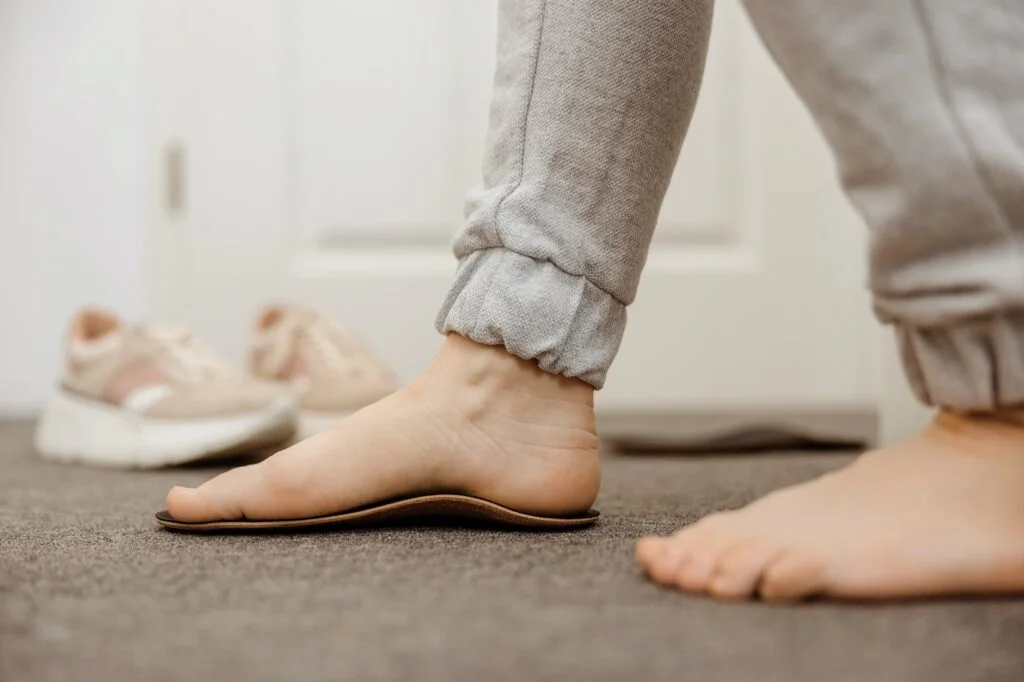
Flexible flatfoot is one of the most common types. It typically begins in childhood or adolescence and continues into adulthood, usually occurring in both feet and progressing in severity through the adult years. As the deformity worsens, the soft tissues (tendons and ligaments) of the arch may stretch or tear and can become inflamed. The term “flexible” means that while the foot is flat when standing (weight bearing), the arch returns when not standing.
It is important to address flat feet early with our foot specialists at Desert Foot and Ankle to help prevent these problems and to determine the right treatment plan for you.
Treatment Options for Flat Feet
The best way to avoid the complications of flat feet is to visit us at Desert Foot and Ankle. After a thorough evaluation, we may be able to provide custom orthotics designed to support your arches, correct over-pronation, and decrease your chances of needing surgery down the road.
Better fitting footwear is another important part of managing flat feet. Shoes with proper arch support, a stable heel, and adequate cushioning can make a meaningful difference in how your feet feel throughout the day, especially when combined with custom orthotics.
Other treatments we may recommend include foot and ankle stretches to loosen a tight Achilles tendon, icing painful areas to calm inflammation, anti-inflammatory medicine when appropriate, and supportive bracing or taping to stabilize the arch and reduce strain on surrounding tissues.
In severe cases where the deformity is progressive or conservative care no longer controls symptoms, surgery may be required to reconstruct the arch and restore function. Our goal is always to start with the least invasive option that fits your condition and lifestyle.
If flat feet are causing pain or affecting your activity, schedule an evaluation with our team so we can build a treatment plan that supports your feet now and helps protect them for the long term.
Flat Feet Care at a Location Near You
Visit a Desert Foot and Ankle location for personalized flat feet treatment.

Ready to give your arches the support they’ve been missing?
Book a visit with Desert Foot and Ankle and let’s get you walking comfortably.