Relief From Corns and Calluses
Painful thickened skin on your feet or toes? We identify the source of friction and help your skin heal.
What You Need To Know
Understanding corns and calluses and when to see a podiatrist.
Understanding Corns and Calluses
A corn is a small circular thickened lesion in the skin of the foot. It usually forms due to repeated pressure on the skin, such as the rubbing of a shoe. The name “corn” comes from its resemblance to a kernel of corn. A corn is different from a callus in that it has a central core of hard material.
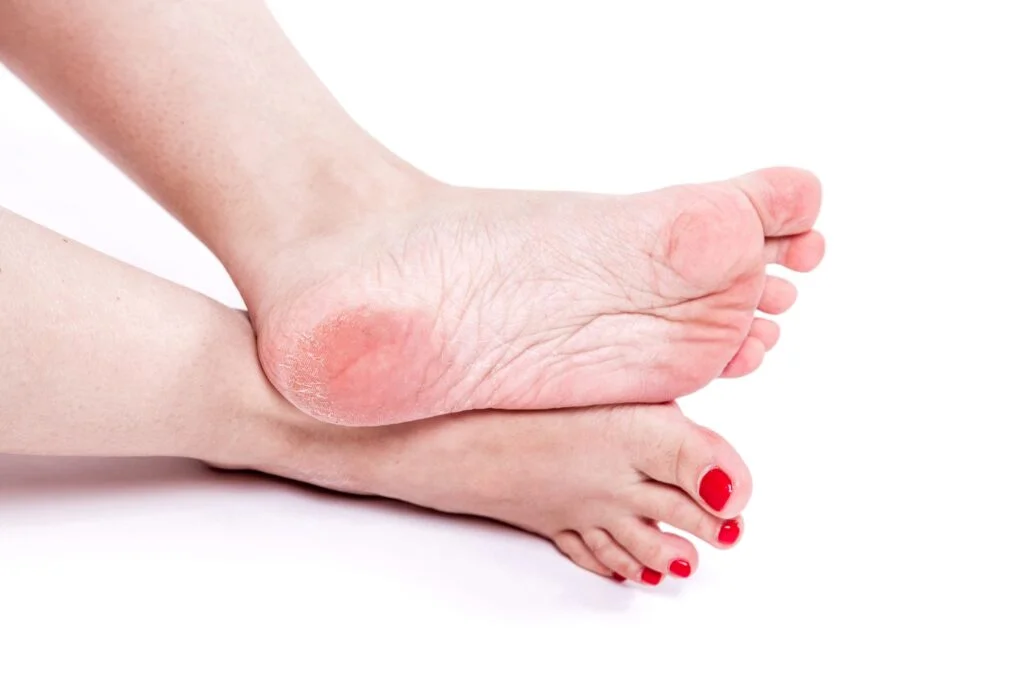
A callus is a thickened area of skin on the foot caused by pressure and repeated rubbing, such as from a shoe or sock. The rubbing causes the skin to produce a layer of protective skin. Calluses vary in size and can become painful. Many people use the terms corns and calluses interchangeably, but they are two different things. Corns are smaller, feature a hardened bump in the center, and usually develop on non-weight-bearing areas like the sides or tops of your toes. Calluses develop on the heels, balls, or soles of your feet, are typically larger than corns, and usually are not painful.
Telltale signs include a thick, raised area of skin, a hardened or rough bump, tenderness or pain that affects your skin, and waxy or dry skin. Over time, a corn or callus might also start flaking or shed layers of skin.
Corns and calluses may also develop due to irregularities affecting your feet, such as bunions, hammertoes, or bumps caused by rheumatoid arthritis. Other factors include flatfeet, bone spurs, or pressure caused by an abnormal gait. If a corn or callus becomes inflamed or painful to the touch, or if you have diabetes and develop a corn or callus, make an appointment with our office today.
Treatment and Prevention Options
There are a number of treatment options for corns and calluses. When they get hard enough to cause pain, a podiatrist will recommend the treatment option most appropriate for you. However, if the underlying cause is not treated or removed, the corn or callus may return.
Our providers use conservative treatments to address corns and calluses. Following an exam and discussion of your symptoms, your doctor might recommend trimming away your excess skin or using shoe inserts. In most cases, conservative measures of care are enough. For example, wearing roomier shoes may prevent pain and allow your skin to heal. If necessary, your doctor might also prescribe a callus-removing medication. If you develop recurring calluses or corns, surgical intervention may be necessary to better align the bone that is causing friction.
It is important to avoid trying to remove a corn at home or using medicated corn pads, as serious infection may occur. People who have calluses are cautioned against performing “bathroom surgery,” as this can lead to cuts and infection. If you have diabetes or another condition that affects your circulation, corns and calluses may lead to an infection or more serious health problems.
Our podiatrists regularly work with patients to alleviate the source of friction and prevent further corns and calluses from developing. If you suffer from painful corns and calluses, do not hesitate to call us or request an appointment online. Our doctors can develop an effective treatment course to get you back in action as soon as possible.
Convenient Locations Near You
Find a Desert Foot and Ankle office near you for corn and callus care.


Don’t let painful corns and calluses keep you from the shoes and activities you love.
Our podiatrists are here to help you find relief. Book your visit today.